
AI Ethics
Tools that generate people need clear limits.
Covely generates people, voices and brands. That is exactly why consent, safety and honesty about what is synthetic are product requirements here, not a policy page nobody reads.
Three commitments
Everything below follows from these. Where a rule limits what the product can do, we accept the limit.
Consent first
No face and no voice enters Covely without documented permission from the person it belongs to.
Safety by design
Automated checks plus human review, and a list of uses we refuse regardless of who is asking.
Honest about synthetic
Generated content should be recognisable as generated wherever a viewer, a platform or a regulator expects it.
Consent, likeness and voice
A digital creator is a real person's face. We treat it that way.
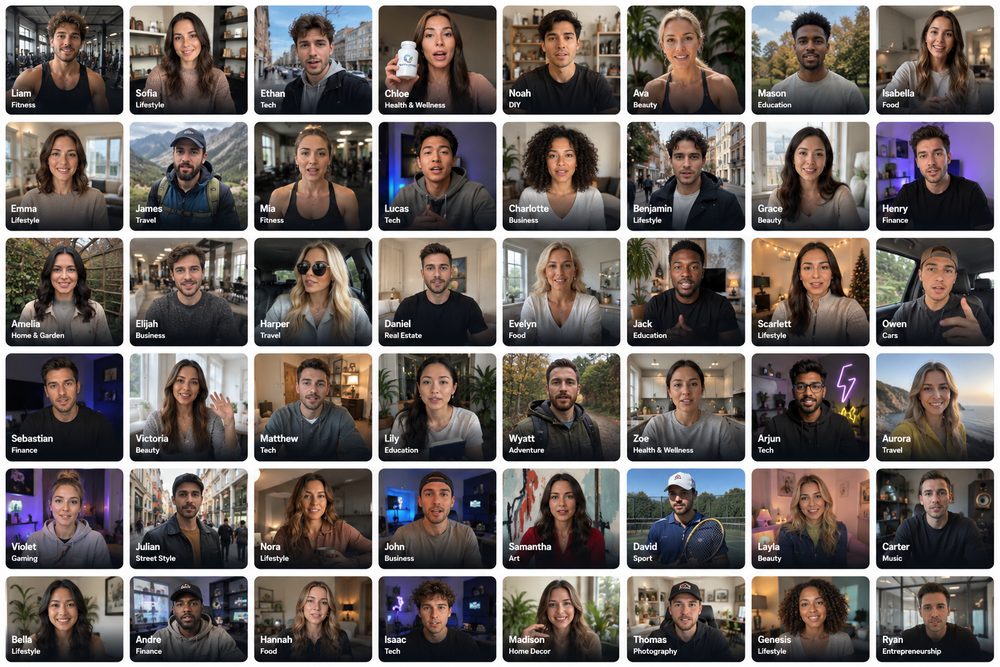
- Library creators are built from performers who gave written permission for synthetic use, for a defined scope, and were paid for it.
- Custom creators and cloned voices require documented permission from the person, uploaded by you and kept on record.
- No public figures. We do not build a likeness or a voice of a real person who has not agreed to it, however famous.
- Withdrawal works. A person can ask us to retire their likeness or voice, and it comes out of the library.
- Your custom assets stay yours. They are scoped to your account, not shared into a public library.
Safety and prohibited uses
Moderation runs on generation, not after publication. Some of it is automated, some of it is a person.
How we check
Prompt and output screening for the categories below, before an asset exists.
Custom creators, cloned voices and flagged generations are looked at by a person.
Generation is tied to an account, so abuse has an owner and a consequence.
Anyone can write to us about content or a likeness, and we act on it.
What we refuse
Content that presents a real person as saying or endorsing something they did not.
Synthetic political messaging built to look like it came from someone else.
Including anything sexualising minors, which we report rather than merely block.
Fabricated medical, financial or scientific claims, or invented reviews and endorsements.
This list is not exhaustive and it grows. If a use is legal but would make a viewer feel deceived, treat it as out of bounds and ask us.
Say that it is generated
Synthetic creative is not a problem. Synthetic creative pretending to be a documentary is.
- Where a platform requires an AI-content label, use it. Every major ad platform now has one.
- Where a creator is synthetic and the format implies a real customer, say so in the creative.
- Keep the generation record. Covely keeps the project, the inputs and the references behind every asset.
- Follow the market you publish in, not the loosest one you can find.
Why we care commercially
Undisclosed synthetic endorsement is the fastest way for a brand to lose the audience it just bought. The cheapest protection is a label and an honest script.
Regulation
Where the EU AI Act applies to us
Covely generates synthetic image, video and audio, so the Act's transparency rules land on us directly rather than in the abstract. This is what they ask for, and what we hold ourselves to.
- Article 50(2), marking what a machine made. A provider of a system that generates synthetic image, audio or video has to mark its output so it can be detected as artificially generated. We treat that as a product requirement rather than a notice: the marker belongs in the file, not only on the screen next to it.
- Article 50(4), deep fakes. Whoever publishes content that realistically depicts a real person has to say it was generated. That obligation is the publisher's, which means yours, so our job is to make it easy to meet: every asset keeps the project, the inputs and the references behind it.
- Article 5, prohibited practices. The Act bans a set of uses outright. The list of things we refuse, further up this page, is wider than the ban, and it stays wider.
- Article 4, AI literacy. Anyone operating a system like this is expected to understand what it does and where it fails. It is why the model notes say which model ran, and why we tell you when a step is unreliable instead of shipping it as finished.
The Act phases in over several years, and most of it is aimed at high-risk systems in Annex III: hiring, credit, biometrics, critical infrastructure. A creative production tool is not one of those, so there is no conformity assessment and no CE marking in play here, and we would rather say that plainly than imply an approval nobody has given us. If your legal team needs the detail in writing, ask us for it.
Your material and your data
Brand kits, products, references and finished assets are yours.
Yours to keep
Your products, references and generated assets belong to you. We do not sell them and we do not put them in a public showcase without asking.
Passed on only to generate
A generation sends the model provider what that step needs, and nothing else. Providers are bound by their own terms, which we review before adding a model.
Removable
Ask us to delete an account's material and it goes, including custom creators and cloned voices.
The models underneath
Covely builds on third-party generative models. That means their capabilities, and their limits, are part of our responsibility.
- We review a provider's terms and safety posture before adding a model.
- We remove or restrict a model that fails our bar, even a popular one.
- Generation quality varies by model. Where a step is unreliable, we say so rather than shipping it as finished.
- Automatic routing exists to pick the model suited to a task, not to hide which one ran.
Questions we get asked
Can I clone my own voice, or a colleague's?
Your own, yes. Someone else's only with their documented permission, which you upload with the request. We keep that record.
Can I use a digital creator to imply a real customer review?
You can produce testimonial-format creative, and you should make clear that the presenter is synthetic. Presenting a generated person as a verified customer of your product is impersonation of a customer, and it is not something we support.
Does Covely comply with the EU AI Act?
The parts that apply to a system generating synthetic media, yes: output is labelled as generated, every asset keeps the record behind it, and our refusal list is wider than the Act's prohibitions. Covely is not a high-risk system under Annex III, so there is no conformity assessment or CE marking involved, and no body certifies compliance for a tool like this. What is on this page is our own statement, and you can hold us to it.
Who owns what Covely generates?
You do, within the terms of your plan and the underlying model providers' terms. We do not claim ownership of your output.
How do I report content or a likeness?
Write to hello@covely.ai with what you saw and where. Likeness reports from the person concerned go to the top of the queue.
Hold us to this.
If something on the platform does not match what is written here, tell us and we will fix the product or fix the page.